
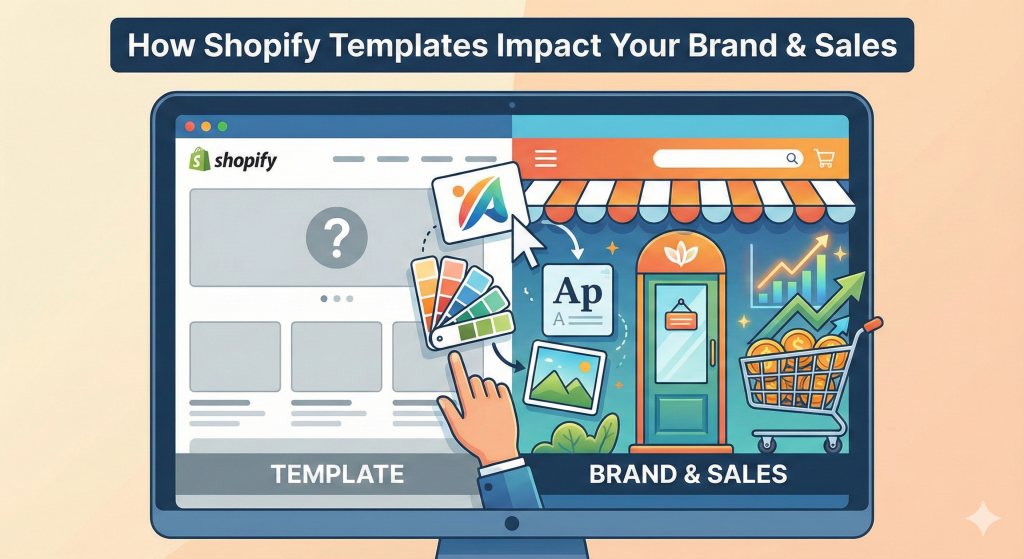
Choosing the right Shopify template design for your online store is one of the most critical decisions you will make as a business owner. Your Shopify template, or theme, acts as the digital storefront for your brand. It dictates how customers perceive you, how easily they can find products, and ultimately, whether they trust you enough to make a purchase.
Many merchants make the mistake of selecting a theme based solely on aesthetics. While looks are important, the underlying structure of your template influences everything from search engine rankings to page load speed.
At SEO Tailor, we understand the deep connection between technical structure and sales performance. As a designated Shopify Partner since 2018, we have spent years helping businesses fine-tune their themes to create bespoke branding and increase customer conversions.
What Are Shopify Templates?
Shopify templates (often called themes) are the pre-designed layouts that determine the look and feel of your online store. They provide the framework for your content, including where your logo sits, how products are displayed, and how the navigation menu operates.
Think of a template as the foundation of a house. You can paint the walls and change the furniture later, but moving the structural walls is much more difficult.
Free vs Premium Templates
Shopify offers both free and premium themes.
- Free Themes: These are built by Shopify. They are reliable, fast, and great for new businesses. However, they often lack advanced customisation options and can make your store look similar to thousands of others.
- Premium Themes: These are developed by third-party agencies. They usually offer more built-in features, unique layouts, and design flexibility, but they require a financial investment.
Choosing the right foundation is essential because switching themes later can be a complex process involving data migration and re-branding.
Why Shopify Templates Matter for Branding
Your brand is more than just a logo; it is the total experience a customer has with your company. Your Shopify template is the primary vehicle for delivering that experience.
Visual Identity and Consistency
A chaotic website signals a chaotic business. A high-quality template allows you to maintain consistent fonts, colours, and spacing across every page. This consistency builds recognition. When a customer lands on a product page from an ad, it should feel exactly like your homepage.
Mobile Responsiveness
With more than half of all eCommerce traffic coming from mobile devices, your template must adapt flawlessly to smaller screens. If your branding breaks on a mobile phone—text overlapping images or buttons that are too small to tap—you lose credibility instantly.
UX and Building Trust
User Experience (UX) is the bridge between a visitor and a customer. A professional template uses established design patterns that users instinctively understand. When a site works exactly how a user expects it to, it builds subconscious trust. If they have to fight your template to find a “Buy Now” button, they will leave.
How Shopify Templates Affect Customer Conversions
Your conversion rate is the percentage of visitors who actually buy something. Your theme plays a massive role in this metric.
Page Load Speed
Heavy, poorly coded templates are conversion killers. If your theme is bloated with unnecessary code, your pages will load slowly. Studies consistently show that even a one-second delay in page load time can cause a significant drop in conversions.
Navigation
Can your customers find what they want in three clicks or less? Your template defines your menu structure. Complex or hidden navigation frustrates users. High-converting themes prioritise clear, intuitive menus that guide the user to the checkout.
Product Page Layout
The product page is where the decision happens. The template dictates the prominence of your product images, the clarity of your description, and the position of the “Add to Cart” button. A layout that buries key information will hurt sales.
Checkout Experience
While the actual checkout process is standard on Shopify (unless you are on Shopify Plus), the steps leading up to it are controlled by your theme. A seamless transition from the cart drawer to the checkout page reduces cart abandonment.
Common Mistakes Businesses Make with Shopify Templates
Even with the best intentions, merchants often stumble when setting up their store design.
- Choosing Based Only on Looks: It is easy to fall in love with a demo store that uses beautiful photography. Remember, you are buying the layout, not the photos. Ensure the structure works for your specific products.
- Overloading with Apps: Instead of customising the theme code, some owners install dozens of apps to get the features they want. This slows down the site drastically.
- Poor Mobile Optimisation: Many businesses design their site on a desktop and forget to check how it looks on a phone until it is too late.
- Ignoring SEO Structure: Some templates use incorrect heading tags (H1, H2, H3) or hide content in ways that search engines cannot read. This hurts your organic traffic.
How SEO Tailor Gets the Best Out of Shopify Templates
We believe your store should be as unique as your brand. We don’t just install a theme and walk away; we engineer it for performance. As a Shopify Partner since 2018, SEO Tailor brings extensive experience to every project.
Real-World Theme Customisation
We dive into the Liquid code (Shopify’s coding language) to make changes that drag-and-drop editors cannot handle. This allows for a truly bespoke look without the bloat of extra apps.
UX + SEO Combined Approach
Designers often forget about SEO, and SEO experts often forget about design. We combine both. We ensure your site looks stunning while maintaining a structure that Google loves.
Branding Alignment
We tweak the theme to match your brand voice perfectly. Whether you need a minimalist luxury feel or a vibrant, energetic layout, we adjust the template to reflect your identity.
Conversion-Focused Layout Design
We use data to inform our design choices. We know where to place Trust Badges, how to style your Call-to-Action (CTA) buttons, and how to structure product descriptions to maximise sales.
Optimizing Shopify Templates for SEO & Sales
Even a great template needs tuning. Here is how we optimise themes to drive traffic and sales:
- Heading Structure: We ensure every page has one clear H1 tag followed by logical H2 and H3 tags. This helps Google understand your content hierarchy.
- Image Optimisation: High-resolution images are great, but large file sizes slow you down. We implement lazy loading and proper compression techniques.
- Schema Markup: We add structured data to your template. This code helps search engines display rich snippets, like star ratings and prices, directly in the search results.
- Collection Layout: We organise your collection pages to ensure products are easy to filter and sort, keeping customers engaged longer.
When to Customize vs Change Your Shopify Template
Sometimes, you can fix a house; other times, you need to move.
Customise if:
- You like the general layout but need specific branding tweaks.
- The site speed is generally good, but you need specific features added.
- You want to improve the mobile experience of an otherwise solid theme.
Change your template if:
- The code is outdated and no longer supported by the developer.
- The site is fundamentally slow regardless of optimisation efforts.
- Your product catalogue has grown significantly, and the current layout cannot display it effectively.
Get Expert Help With Your Shopify Template
Your Shopify theme is a powerful tool, but it requires expertise to unlock its full potential. You do not have to navigate the complexities of Liquid code and UX design alone.
Working with an experienced partner ensures your store is built on a solid foundation. At SEO Tailor, we have been helping merchants succeed on Shopify since 2018. Whether you need a full theme audit, a bespoke redesign, or targeted optimisation to boost conversions, we are here to help.
Ready to transform your store?
Contact SEO Tailor today to discuss your project.